Almost everyone agrees that adult ESL teachers should help their English students develop their job skills and practice mock job interviews in our English classes.
During these difficult economic times, however, I would suggest that ESL and even EFL instructors working with college and university students also should focus on practical employment skills. Videotaping practice interviews – and longer is better – remains an invaluable tool.
Yet ESL teachers can also help ESL/EFL students conduct research for possible jobs with information interviews. A common practice in the United States, informational interviews allow job seekers to meet working professionals in their field, collect detailed information on working lives, and expand their network of valuable contacts. Sometimes it also leads to job leads, internships, and even jobs.
More About Informational Interviews on the Web
Vanderbilt University, an elite private university in Tennessee, has compiled an impressive list of 60 informational interviews from a wide variety of disciplines and professions. (Peabody is a leading school of Education within Vanderbilt University). These provide illuminating examples of real-life informational interviews. Note: some speakers have a strong southern accent.
http://streams.peabody.vanderbilt.edu/hod1210/sort_field.htm
Here’s a solid collection of typical informational interview questions from About.com, a fairly reliable New York Times-owned website. Questions are divided into Occupational and Functional categories.
http://jobsearch.about.com/od/infointerviews/a/infointervquest.htm
Here’s a basic video, perhaps targeted for adult education and community college students, that reviews the fundamentals of conducting an informational interview.
http://education-portal.com/videos/Conducting_an_Informational_Interview_Video.html
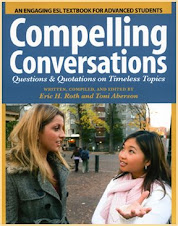
Naturally, many students hope to find job leads from their informational interviews. ESL students can always use more practice job interviews. This chapter of potential job interview questions and quotations comes from Compelling Conversations that I have used with community college, adult education, and university students.
http://www.compellingconversations.com/pdf/practicing_job_interview.pdf
From my perspective, holding both long mock job interviews and hearing trip reports of information interviews are practical, effective uses of precious classroom time.
Ask more. Know more. Share more.
Create Compelling Conversations.
Visit www.CompellingConversations.com
Showing posts with label ESL lessons. Show all posts
Showing posts with label ESL lessons. Show all posts
Sunday, September 27, 2009


Friday, September 18, 2009
What Do Your ESL Students Believe? Find Out!
Why Bring ‘This I Believe’ Essays and Podcasts Into Your English Classroom?
What are your core beliefs? More importantly, what are the core beliefs of your English students? How do you know? Do you like listening to quality radio essays to improve listening skills and critical thinking skills? Are you looking for a friendly way to gently nudge your EFL students into reflecting on their experiences and expressing their ideas?
If so, you might want to consider adding This I Believe radio essays to your curriculum. This I Believe, originally a radio program hosted by legendary journalist Edward R. Murrow in the 1950s, has been resurrected by National Public Radio as a weekly feature.
While the 1950s version sought out short personal essays by leading intellectuals, artists, and prominent personalities, the 21st century version is far more democratic. Anybody can submit an essay – and thousands and thousands of individuals around the world – have.
English teachers and global travelers might appreciate the sample podcast This I Believe: Inviting the World to Dinner by travel writer and Parisian resident Jim Haynes. Students might also appreciate the open spirit and generosity, but if not, they can choose from over 200 other radio essays. In short, The This I Believe website includes a tremendous amount of free resources for teachers and students. Teachers can sign up for the free mailing list and download an exceptional discussion guide. Amazon also sells several collections of This I Believe essays from both the modern version (with audio) and the original collections from over 50 years ago.
Why don’t you try it in your English class? Here is a simple reproducible homework worksheet that allows English students to find, summarize, and share their own favorite podcasts. I usually have students “introduce” their choice in both small groups and before the entire class. After students have listened to several “this I believe” radio essays, they feel more comfortable writing their essay and presenting it before the class for a final project.
So far, my intermediate and advanced students have both enjoyed the assignment and produced original, reflective work. The flexible format also means that English teachers can modify it to meet student or course requirements. Writing instructors can ask for essays; speech instructors can require a speech. Yet students get an often rare chance to hear intelligent voices reveal their personal philosophies in an engaging manner. Further, our students get to speak their minds and share their insights in our strange, wonderful language. I believe that makes a compelling English class too!
As Mr. Murrow would say, “good night and good luck.”
-------------------------------------------------------------------------------
This I Believe Homework Worksheet
Links: This I Believe
http://www.npr.org/templates/story/story.php?storyId=4538138
Please select one radio segment, based on a personal essay, and read by writers. Find a story that resonates with you. Listen carefully. Take notes. Fill out the worksheet below. You will be asked to share your selection with classmates in both a small group and the entire class.
Student:
This I Believe Title:
Author/Reader:
Length:
Who is the author?
What’s the main idea?
Why did you choose this podcast?
Did you hear any new words or phrases?
1.
2.
3.
Who do you imagine is the audience for this podcast? Why?
What is your reaction? Why?
-------------------------------------------------------------------------------------
Ask more. Know more. Share more.
Create Compelling Conversations.
Visit www.CompellingConversations.com
What are your core beliefs? More importantly, what are the core beliefs of your English students? How do you know? Do you like listening to quality radio essays to improve listening skills and critical thinking skills? Are you looking for a friendly way to gently nudge your EFL students into reflecting on their experiences and expressing their ideas?
If so, you might want to consider adding This I Believe radio essays to your curriculum. This I Believe, originally a radio program hosted by legendary journalist Edward R. Murrow in the 1950s, has been resurrected by National Public Radio as a weekly feature.
While the 1950s version sought out short personal essays by leading intellectuals, artists, and prominent personalities, the 21st century version is far more democratic. Anybody can submit an essay – and thousands and thousands of individuals around the world – have.
English teachers and global travelers might appreciate the sample podcast This I Believe: Inviting the World to Dinner by travel writer and Parisian resident Jim Haynes. Students might also appreciate the open spirit and generosity, but if not, they can choose from over 200 other radio essays. In short, The This I Believe website includes a tremendous amount of free resources for teachers and students. Teachers can sign up for the free mailing list and download an exceptional discussion guide. Amazon also sells several collections of This I Believe essays from both the modern version (with audio) and the original collections from over 50 years ago.
Why don’t you try it in your English class? Here is a simple reproducible homework worksheet that allows English students to find, summarize, and share their own favorite podcasts. I usually have students “introduce” their choice in both small groups and before the entire class. After students have listened to several “this I believe” radio essays, they feel more comfortable writing their essay and presenting it before the class for a final project.
So far, my intermediate and advanced students have both enjoyed the assignment and produced original, reflective work. The flexible format also means that English teachers can modify it to meet student or course requirements. Writing instructors can ask for essays; speech instructors can require a speech. Yet students get an often rare chance to hear intelligent voices reveal their personal philosophies in an engaging manner. Further, our students get to speak their minds and share their insights in our strange, wonderful language. I believe that makes a compelling English class too!
As Mr. Murrow would say, “good night and good luck.”
-------------------------------------------------------------------------------
This I Believe Homework Worksheet
Links: This I Believe
http://www.npr.org/templates/story/story.php?storyId=4538138
Please select one radio segment, based on a personal essay, and read by writers. Find a story that resonates with you. Listen carefully. Take notes. Fill out the worksheet below. You will be asked to share your selection with classmates in both a small group and the entire class.
Student:
This I Believe Title:
Author/Reader:
Length:
Who is the author?
What’s the main idea?
Why did you choose this podcast?
Did you hear any new words or phrases?
1.
2.
3.
Who do you imagine is the audience for this podcast? Why?
What is your reaction? Why?
-------------------------------------------------------------------------------------
Ask more. Know more. Share more.
Create Compelling Conversations.
Visit www.CompellingConversations.com
Saturday, February 14, 2009
Going Beyond the Romantic Hype: Relationship Questionships for Adults
Do you match? How do you know? Where does kissing come from?
Are you romantically involved? Do you match your partner? How do you know? Who will you choose to share your life with? Are you considering marriage? Are you already married? Use these questions as a springboard to reflect on your options, choices, and desires on this Valentine’s Day.
Here is chapter #33 from Compelling Conversations that many friends have told me is better for native speakers than English language learners or ESL classrooms. Perhaps they are right. On the other hand, I’ve had great conversations in my adult ESL and college ESL classes using this chapter too.
As both a happily married man of 14 years and the child of divorced parents, these questions seem like smart questions to ask - even for romantics on Valentine’s Day. Perhaps especially on Valentine’s Day when the official propaganda of “love will conquer all” seems so pervasive. So whether English teachers ask themselves, their partner, or their students these questions, I’d like to share this list on my blog tonight.
I’m also including a short videoclip from Discovery News that I found quite interesting on the origins of kissing and how that satisfying activity is believed to have spread around the globe. Enjoy!
The Skinny on Smooching from Discovery News
1. Why do (did) you want to get married?
2. Do (did) you have a checklist of qualities for a potential spouse?
3. What are the three main qualifications on your checklist? Partner?
Provider? Lover? Friend?
4. When did you fall in love? Did one person fall first? Who?
5. How did you know your lover was the one? How did your thinking
evolve?
6. Did you ever have moments of doubt? How did your thinking evolve?
7. Do you think people should live together before they get married?
Why? Can you share some examples?
8. Are sex, love and marriage linked in your mind, or is each separate?
How are they different?
9. What are some endearing qualities of your companion?
10. Do you like your partner’s friends? Do you respect them? Why?
11. What advice have your parents and close friends given you? Your
extended family? How important is their opinion in your decision? Why?
12. Do you think you are marrying only an individual or are you also
marrying your spouse’s family? How would you describe your
potential in-laws?
13. What does your partner do that annoys you?
14. Do you expect to be the pilot, co-pilot, or passenger in the
marriage? Why?
15. What, if anything, would definitely cause you to divorce? Why?
Q U E S T I O N S A N D Q U OTAT I O N S O N T I M E L E S S TO P I C S • 1 0 5
V O C A B U L A R Y
Review these words and expressions. Circle the words that you know.
potential ……………………………………………………………………………………….
neat freak ……………………………………………………………………………………..
spouse …………………………………………………………………………………………..
nupital ………………………………………………………………………………………….
conflicts ………………………………………………………………………………………..
checklist ………………………………………………………………………………………..
resolve ………………………………………………………………………………………….
pre-nuptial ……………………………………………………………………………………
compatible ……………………………………………………………………………………
pack rat ………………………………………………………………………………………..
justify ……………………………………………………………………………………………
evolve …………………………………………………………………………………………..
P R O V E R B S
What do these proverbs mean? Can you share some other proverbs?
The needle is always accompanied by the thread.—Korean
Strange is the affinity that binds two in marriage.—Japanese
Whoever marries only for beauty will live in misery.—Russian
T H E C O N V E R S A T I O N C O N T I N U E S …
1. Thinking about personal preferences, do you like to stay up late or
get up early? Do you have compatible sleeping habits?
2. Do you have similar media habits? What about tastes in TV shows
and movies?
3. Where do you prefer to live? Country? City? Farm? Apartment?
House?
4. Are you a pack rat? Are you a neat freak? Are your styles
compatible?
5. Will you still love your partner when he or she is 64? Will your
partner love you with wrinkles?
6. Do you know an older couple that might be a model for a good
partnership? Who are they?
7. What activities do you enjoy in your leisure time? Will your spouse
join you?
8. Do you and your lover share spending philosophies? Do you shop
together?
9. Do you expect to live with older generations? Who? Why? Where?
When?
10. What is your approach to settling conflicts? How often do you have
conflicts?
11. Do you want children? How many?
N O T E S & Q U E S T I O N S
. . . . . . . . . . . . . . . . . . . . . . . . . . . . . . . . . . . . . . .
. . . . . . . . . . . . . . . . . . . . . . . . . . . . . . . . . . . . . . .
. . . . . . . . . . . . . . . . . . . . . . . . . . . . . . . . . . . . . . .
. . . . . . . . . . . . . . . . . . . . . . . . . . . . . . . . . . . . . . .
. . . . . . . . . . . . . . . . . . . . . . . . . . . . . . . . . . . . . . .
. . . . . . . . . . . . . . . . . . . . . . . . . . . . . . . . . . . . . . .
. . . . . . . . . . . . . . . . . . . . . . . . . . . . . . . . . . . . . . .
. . . . . . . . . . . . . . . . . . . . . . . . . . . . . . . . . . . . . . .
1 0 6 • w w w. c o m p e l l i n g c o n v e r s a t i o n s . c o m
12. Do you believe in birth control? Why?
13. How do you think your baby would look like? Why?
14. What kind of parent do you expect your spouse to become? Why?
15. Would you want your sons to be like the man you’re marrying?
Would you want your daughters to be like the woman you’re
marrying?
16. Do you expect to follow family or religious traditions? Which ones?
Why?
17. If disagreements arise about children, how do you expect to
resolve them?
18. Do you think all money should be shared or should each spouse
have separate bank accounts? Why? How do you expect to
manage household expenses?
19. What were the best gifts that you’ve given or received in the
relationship?
20. What passions do you share? What unites you as a couple?
21. Do you have a favorite photograph of you as a couple? Can you
describe it?
22. Where do you want to travel together? What do you want to see
together?
23. What are you looking forward to doing together as a married
couple?
24. How do you expect your life to change once you are married?
What are some advantages of being married?
25. Do you have any tips or suggestions on how to create and preserve
a happy marriage?
Q U O T A T I O N S
Which two quotations come closest to your attitudes?
1. “By all means marry; if you get a good wife, you’ll become happy;
if you get a bad one, you’ll become a philosopher.”
—Socrates (470-339 BC), Greek philosopher
2. “Man’s best possession is a sympathetic wife.”
—Euripides (480-406 BC), playwright
3. “I’m so gullible. I’m so damn gullible. And I am so sick of being
gullible.”
—Lana Turner (1921-1995), Hollywood star married seven times
4. “Love is the ideal thing, marriage a real thing; a confusion of the
real with the ideal never goes unpunished.”
—Goethe (1749-1832), German poet, novelist, and scientist
5. “Marriage is a great institution, but I’m not ready for an
institution.”
—Mae West (1892-1980), American actress
7. “Love means never having to say you’re sorry.”
—Ali McGraw in Love Story (1970)
“Love is the ideal thing, marriage a real
thing; a confusion of the real with the ideal
never goes unpunished.”
Goethe (1749-1832),
German poet, novelist, and scientist
Q U E S T I O N S A N D Q U OTAT I O N S O N T I M E L E S S TO P I C S • 1 0 7
8. “Marriage: A word that should be pronounced ‘mirage.’”
—Herbert Spencer (1820-1903), English philosopher
9. “No matter who you get married to, you wake up married to
somebody else.”
—Marlon Brando in Guys and Dolls (1955)
10. “Second marriage: the triumph of hope over experience.”
—Dr. Samuel Johnson (1709-1784), English writer
11. “Marriage is a very good thing, but I think it’s a mistake to make a
habit of it.”
—W. Somerset Maugham (1874-1965), English novelist
12. “A happy marriage is a long conversation that always seems too
short.”
—Andre Maurois (1885-1967), French author
13. “A successful marriage is not a gift; it is an achievement.”
—Ann Landers (1918-2002), American advice columnist
★
O N Y O U R O W N
With your class partner, list three celebrity marriages that have ended in divorce. For each couple who divorced, list two reasons you think their marriage did not last.
Then, list three marriages of well known people that have lasted
more than 20 years. For each couple, list two reasons why you
think their marriage lasted. Share with the class.
1. ……………………………………………………………………………………………………
• . ……………………………………………………………………………………………….
• . ……………………………………………………………………………………………….
2. …………………………………………………………………………………………………….
• . ……………………………………………………………………………………………….
• . ……………………………………………………………………………………………….
3. …………………………………………………………………………………………………….
• . ……………………………………………………………………………………………….
• . ……………………………………………………………………………………………….
1. ……………………………………………………………………………………………………
• . ……………………………………………………………………………………………….
• . ……………………………………………………………………………………………….
2. …………………………………………………………………………………………………….
• . ……………………………………………………………………………………………….
• . ……………………………………………………………………………………………….
3. …………………………………………………………………………………………………….
• . ……………………………………………………………………………………………….
• . ……………………………………………………………………………………………….
1 0 8 • w w w. c o m p e l l i n g c o n v e r s a t i o n s . c o m
Ask more. Know more. Share more.
Create Compelling Conversations.
Visit www.CompellingConversations.com
Are you romantically involved? Do you match your partner? How do you know? Who will you choose to share your life with? Are you considering marriage? Are you already married? Use these questions as a springboard to reflect on your options, choices, and desires on this Valentine’s Day.
Here is chapter #33 from Compelling Conversations that many friends have told me is better for native speakers than English language learners or ESL classrooms. Perhaps they are right. On the other hand, I’ve had great conversations in my adult ESL and college ESL classes using this chapter too.
As both a happily married man of 14 years and the child of divorced parents, these questions seem like smart questions to ask - even for romantics on Valentine’s Day. Perhaps especially on Valentine’s Day when the official propaganda of “love will conquer all” seems so pervasive. So whether English teachers ask themselves, their partner, or their students these questions, I’d like to share this list on my blog tonight.
I’m also including a short videoclip from Discovery News that I found quite interesting on the origins of kissing and how that satisfying activity is believed to have spread around the globe. Enjoy!
The Skinny on Smooching from Discovery News
1. Why do (did) you want to get married?
2. Do (did) you have a checklist of qualities for a potential spouse?
3. What are the three main qualifications on your checklist? Partner?
Provider? Lover? Friend?
4. When did you fall in love? Did one person fall first? Who?
5. How did you know your lover was the one? How did your thinking
evolve?
6. Did you ever have moments of doubt? How did your thinking evolve?
7. Do you think people should live together before they get married?
Why? Can you share some examples?
8. Are sex, love and marriage linked in your mind, or is each separate?
How are they different?
9. What are some endearing qualities of your companion?
10. Do you like your partner’s friends? Do you respect them? Why?
11. What advice have your parents and close friends given you? Your
extended family? How important is their opinion in your decision? Why?
12. Do you think you are marrying only an individual or are you also
marrying your spouse’s family? How would you describe your
potential in-laws?
13. What does your partner do that annoys you?
14. Do you expect to be the pilot, co-pilot, or passenger in the
marriage? Why?
15. What, if anything, would definitely cause you to divorce? Why?
Q U E S T I O N S A N D Q U OTAT I O N S O N T I M E L E S S TO P I C S • 1 0 5
V O C A B U L A R Y
Review these words and expressions. Circle the words that you know.
potential ……………………………………………………………………………………….
neat freak ……………………………………………………………………………………..
spouse …………………………………………………………………………………………..
nupital ………………………………………………………………………………………….
conflicts ………………………………………………………………………………………..
checklist ………………………………………………………………………………………..
resolve ………………………………………………………………………………………….
pre-nuptial ……………………………………………………………………………………
compatible ……………………………………………………………………………………
pack rat ………………………………………………………………………………………..
justify ……………………………………………………………………………………………
evolve …………………………………………………………………………………………..
P R O V E R B S
What do these proverbs mean? Can you share some other proverbs?
The needle is always accompanied by the thread.—Korean
Strange is the affinity that binds two in marriage.—Japanese
Whoever marries only for beauty will live in misery.—Russian
T H E C O N V E R S A T I O N C O N T I N U E S …
1. Thinking about personal preferences, do you like to stay up late or
get up early? Do you have compatible sleeping habits?
2. Do you have similar media habits? What about tastes in TV shows
and movies?
3. Where do you prefer to live? Country? City? Farm? Apartment?
House?
4. Are you a pack rat? Are you a neat freak? Are your styles
compatible?
5. Will you still love your partner when he or she is 64? Will your
partner love you with wrinkles?
6. Do you know an older couple that might be a model for a good
partnership? Who are they?
7. What activities do you enjoy in your leisure time? Will your spouse
join you?
8. Do you and your lover share spending philosophies? Do you shop
together?
9. Do you expect to live with older generations? Who? Why? Where?
When?
10. What is your approach to settling conflicts? How often do you have
conflicts?
11. Do you want children? How many?
N O T E S & Q U E S T I O N S
. . . . . . . . . . . . . . . . . . . . . . . . . . . . . . . . . . . . . . .
. . . . . . . . . . . . . . . . . . . . . . . . . . . . . . . . . . . . . . .
. . . . . . . . . . . . . . . . . . . . . . . . . . . . . . . . . . . . . . .
. . . . . . . . . . . . . . . . . . . . . . . . . . . . . . . . . . . . . . .
. . . . . . . . . . . . . . . . . . . . . . . . . . . . . . . . . . . . . . .
. . . . . . . . . . . . . . . . . . . . . . . . . . . . . . . . . . . . . . .
. . . . . . . . . . . . . . . . . . . . . . . . . . . . . . . . . . . . . . .
. . . . . . . . . . . . . . . . . . . . . . . . . . . . . . . . . . . . . . .
1 0 6 • w w w. c o m p e l l i n g c o n v e r s a t i o n s . c o m
12. Do you believe in birth control? Why?
13. How do you think your baby would look like? Why?
14. What kind of parent do you expect your spouse to become? Why?
15. Would you want your sons to be like the man you’re marrying?
Would you want your daughters to be like the woman you’re
marrying?
16. Do you expect to follow family or religious traditions? Which ones?
Why?
17. If disagreements arise about children, how do you expect to
resolve them?
18. Do you think all money should be shared or should each spouse
have separate bank accounts? Why? How do you expect to
manage household expenses?
19. What were the best gifts that you’ve given or received in the
relationship?
20. What passions do you share? What unites you as a couple?
21. Do you have a favorite photograph of you as a couple? Can you
describe it?
22. Where do you want to travel together? What do you want to see
together?
23. What are you looking forward to doing together as a married
couple?
24. How do you expect your life to change once you are married?
What are some advantages of being married?
25. Do you have any tips or suggestions on how to create and preserve
a happy marriage?
Q U O T A T I O N S
Which two quotations come closest to your attitudes?
1. “By all means marry; if you get a good wife, you’ll become happy;
if you get a bad one, you’ll become a philosopher.”
—Socrates (470-339 BC), Greek philosopher
2. “Man’s best possession is a sympathetic wife.”
—Euripides (480-406 BC), playwright
3. “I’m so gullible. I’m so damn gullible. And I am so sick of being
gullible.”
—Lana Turner (1921-1995), Hollywood star married seven times
4. “Love is the ideal thing, marriage a real thing; a confusion of the
real with the ideal never goes unpunished.”
—Goethe (1749-1832), German poet, novelist, and scientist
5. “Marriage is a great institution, but I’m not ready for an
institution.”
—Mae West (1892-1980), American actress
7. “Love means never having to say you’re sorry.”
—Ali McGraw in Love Story (1970)
“Love is the ideal thing, marriage a real
thing; a confusion of the real with the ideal
never goes unpunished.”
Goethe (1749-1832),
German poet, novelist, and scientist
Q U E S T I O N S A N D Q U OTAT I O N S O N T I M E L E S S TO P I C S • 1 0 7
8. “Marriage: A word that should be pronounced ‘mirage.’”
—Herbert Spencer (1820-1903), English philosopher
9. “No matter who you get married to, you wake up married to
somebody else.”
—Marlon Brando in Guys and Dolls (1955)
10. “Second marriage: the triumph of hope over experience.”
—Dr. Samuel Johnson (1709-1784), English writer
11. “Marriage is a very good thing, but I think it’s a mistake to make a
habit of it.”
—W. Somerset Maugham (1874-1965), English novelist
12. “A happy marriage is a long conversation that always seems too
short.”
—Andre Maurois (1885-1967), French author
13. “A successful marriage is not a gift; it is an achievement.”
—Ann Landers (1918-2002), American advice columnist
★
O N Y O U R O W N
With your class partner, list three celebrity marriages that have ended in divorce. For each couple who divorced, list two reasons you think their marriage did not last.
Then, list three marriages of well known people that have lasted
more than 20 years. For each couple, list two reasons why you
think their marriage lasted. Share with the class.
1. ……………………………………………………………………………………………………
• . ……………………………………………………………………………………………….
• . ……………………………………………………………………………………………….
2. …………………………………………………………………………………………………….
• . ……………………………………………………………………………………………….
• . ……………………………………………………………………………………………….
3. …………………………………………………………………………………………………….
• . ……………………………………………………………………………………………….
• . ……………………………………………………………………………………………….
1. ……………………………………………………………………………………………………
• . ……………………………………………………………………………………………….
• . ……………………………………………………………………………………………….
2. …………………………………………………………………………………………………….
• . ……………………………………………………………………………………………….
• . ……………………………………………………………………………………………….
3. …………………………………………………………………………………………………….
• . ……………………………………………………………………………………………….
• . ……………………………………………………………………………………………….
1 0 8 • w w w. c o m p e l l i n g c o n v e r s a t i o n s . c o m
Ask more. Know more. Share more.
Create Compelling Conversations.
Visit www.CompellingConversations.com
Saturday, November 15, 2008
Talking About Urban Pleasures, Perils in ESL Classrooms
Cities attract the young, the strong, and the ambitious. Cities also provide housing, jobs, and hope for those fleeing boredom, economic crisis, and war. Our 21st century cities, like our English classrooms, reflect the diversity of the human experience.
Millions move from the countryside and across the globe to live in new cities every year. Cities provide employment, culture, and education. Cities are exciting. Yet, sometimes danger also lurks in cities. Many students struggle with economic pressures, culture shock, and criminal activity. Shouldn't we discuss these conflicting pressures in our ESL classrooms?
Teaching English in Los Angeles and Santa Monica I’ve found that students, who come from across the globe, eager to talk about cities. Some English students share stories about moving from rural areas and small towns to an international city; other students enjoy telling about their travel experiences. Discussions naturally touch on housing, employment, and lifestyle choices. English language learners – whether adult immigrants creating a new home or university students living abroad – can reflect on their experiences and share insights discussing urban life.
Are you a city person? Why?
How are cities different from small towns?
What cities have you visited? Lived in?
What attracted you to this city?
What do you find stressful about city life?
What do you find satisfying about living in a city?
This month Exploring Cities, one of my favorite chapters, is highlighted as a free chapter on Compelling Conversations. Perhaps you will create some compelling conversations about cities in your classroom too. Check it out.
Ask more. Know more. Share more.
Create Compelling Conversations.
Visit www.CompellingConversations.com
Millions move from the countryside and across the globe to live in new cities every year. Cities provide employment, culture, and education. Cities are exciting. Yet, sometimes danger also lurks in cities. Many students struggle with economic pressures, culture shock, and criminal activity. Shouldn't we discuss these conflicting pressures in our ESL classrooms?
Teaching English in Los Angeles and Santa Monica I’ve found that students, who come from across the globe, eager to talk about cities. Some English students share stories about moving from rural areas and small towns to an international city; other students enjoy telling about their travel experiences. Discussions naturally touch on housing, employment, and lifestyle choices. English language learners – whether adult immigrants creating a new home or university students living abroad – can reflect on their experiences and share insights discussing urban life.
Are you a city person? Why?
How are cities different from small towns?
What cities have you visited? Lived in?
What attracted you to this city?
What do you find stressful about city life?
What do you find satisfying about living in a city?
This month Exploring Cities, one of my favorite chapters, is highlighted as a free chapter on Compelling Conversations. Perhaps you will create some compelling conversations about cities in your classroom too. Check it out.
Ask more. Know more. Share more.
Create Compelling Conversations.
Visit www.CompellingConversations.com
Tuesday, August 19, 2008
Watching the Olympics and Starting Conversations
How often do a billion people share a smile, a sigh, or a televised event?
Have you been watching the Olympics? What has surprised you the most? Why? Who has inspired you? How?
The Olympics reminds us of heroism, sacrifice, excellence, and beauty. It can also spark many conversations.
Although I have not had the pleasure of teaching a conversation class recently, talking about sports always sparked many enjoyable exchanges - even among non-sports fans. This lesson, an except from Compelling Conversations: Questions and Quotations on Timeless Topics for Advanced ESL students, remains a favorite.
Feel free to use it in your English classes. Let the conversations begin!
————————————————————————————–
PLAYING AND WATCHING SPORTS
“The game is my wife. It demands loyalty and responsibility.”
Michael Jordan (1963- ) NBA superstar
Chatting: Talking about sports can be a great ice-breaker. Just do it!
1. Did you play any sports as a child? Which ones? Which was your favorite?
2. Do you play any sports now? Which ones? Which is your favorite? Why?
3. Do girls and women play sports in your native country? If so, which ones?
4. What is the most popular sport in your native country?
5. What equipment or uniform is needed for this sport?
6. How is the game scored? How is a tie decided? What is considered a high score?
7. How long is a game? Are there referees? How do fans usually behave?
8. Which athlete is best known in your homeland? Which sport does he or she play? What do people admire about this athlete?
9. Does your native country participate in the Olympics? In which sports are your countrymen most competitive?
10. What are some team sports? Which do you play?
11. What are some individual sports that you know? Which do you play?
12. Do you prefer to play team sports or individual sports? Why?
13. Which is your favorite sport to watch? Do watch any annual televised sporting event? Have you ever gone to a sporting event? How did the fans behave?
14. Are you a fan of any special team? What do you like about them?
15. What is their nickname e.g. Chicago Bulls, New England Patriots?
16. What does their nickname hope to convey about the team?
17. Does your favorite team have a main rival? Why? Is there a team mascot?
18. Which American athletes are well known in your native land? Which ones?
19. What are some of the ways that athletes train for competition?
20. What do you think is the difference between a game and a sport? Is chess a sport? Is weight lifting a sport? Is golf a sport? Is politics a sport?
21. Who is your favorite athlete? Why do you especially admire this athlete?
22. Do you buy a certain brand of shoes or clothes because of an athlete’s endorsement? If so, which brand? Which athlete?
23. Can you name some sports that involve animals?
24. Is there any sport that you don’t play now, but that you’d like to learn?
25. Do you think any sport rules should be changed? Why?
26. If you could, would you outlaw any sports? Why?
27. Are there any sports which are legal in your homeland, but illegal in the United States? Why? Do you think these sports should be legal?
28. What are the differences between the way athletes are treated in your native country and the way athletes are treated in the U.S.? Which ways do you think are preferable?
29. Are there any disadvantages to playing sports? Examples?
30. What are some advantages to playing sports? How do you feel while playing?
31. If you could play against any athlete in any sport, what sport would you choose?
32. If you could go back in time and attend any sporting event, which would you pick? Why?
33. What makes a great athlete? Who do you think is the greatest athlete of our time? Why?
Vocabulary: Do you know all these words? Can you add 4 more words to this list?
athlete score mascot equipment competition referee nickname rival
endorse endorsement fan brand
Idioms: Try to guess the meanings of these idioms with your partner.
She’s a team player. She knows the game plan.
The biology test was a slamdunk.
The price you’re asking is in the ballpark.
When I caught Bob’s finger in the car door, he was a good sport about it.
You dropped the ball.
Quotations: Which quotations do you like? Can you add one more?
1. “Sports do not build character. They reveal it.”
Heywood Hale Broun (1888-1939), American sports journalist
1. “If you don’t try to win, you might as well hold the Olympics in somebody’s backyard.” Jesse Owns (1913-1980), American with 4 Gold Olympic medals
1. “Sports is the toy department of human life.”
Howard Cosell (1918-1995), sportscaster
1. “Sports is like a war without the killing.” Ted Turner (1938- ), founder of CNN
1. “It ain’t over till it’s over.” Yogi Berra (1925- ), American baseball coach
1. “Whoever wants to know the heart and mind of America had better learn baseball.” Jacques Barzun (1907- ), American historian
1. “The less effort, the faster and more powerful you will be.”
Bruce Lee (1940-1973), film star
1. “Golf is a good walk spoiled.” Mark Twain (1835-1910), humorist
1. “Aggressive fighting for the right is the noblest sport in the world.”
Theodore Roosevelt (1859-1919), U.S. President, sportsman
1. “…no boy from a rich family ever made the big leagues.”
Joe Dimaggio (1914- ), American baseball player
1. “Friendships born on the field of athletic strife are the real gold of competition. Awards become corroded, friends gather no dust.”
Jesse Owns (1913-1980), 4 time Gold medalist in 1936 Olympic Games
1. “Good teams become great ones when the members trust each other enough to surrender the ‘me’ for the ‘we.’” Phil Jackson (1945- ), L.A. Lakers’ coach
1. “How can you think and hit at the same time?”
Yogi Berra (1925-), baseball player and coach
14. “There is no “I” in team, but there is in win.”
Michael Jordan (1963- ) NBA superstar
EXTENSION: Find a picture of an athlete, professional or amateur, playing your favorite sport. Cut it out, bring it to class, and describe the picture and its context.
WWW. Compelling Conversations.com
----------------------------------------------------------------------------------
Ask more. Know more. Share more.
Create Compelling Conversations.
Visit www.CompellingConversations.com
Have you been watching the Olympics? What has surprised you the most? Why? Who has inspired you? How?
The Olympics reminds us of heroism, sacrifice, excellence, and beauty. It can also spark many conversations.
Although I have not had the pleasure of teaching a conversation class recently, talking about sports always sparked many enjoyable exchanges - even among non-sports fans. This lesson, an except from Compelling Conversations: Questions and Quotations on Timeless Topics for Advanced ESL students, remains a favorite.
Feel free to use it in your English classes. Let the conversations begin!
————————————————————————————–
PLAYING AND WATCHING SPORTS
“The game is my wife. It demands loyalty and responsibility.”
Michael Jordan (1963- ) NBA superstar
Chatting: Talking about sports can be a great ice-breaker. Just do it!
1. Did you play any sports as a child? Which ones? Which was your favorite?
2. Do you play any sports now? Which ones? Which is your favorite? Why?
3. Do girls and women play sports in your native country? If so, which ones?
4. What is the most popular sport in your native country?
5. What equipment or uniform is needed for this sport?
6. How is the game scored? How is a tie decided? What is considered a high score?
7. How long is a game? Are there referees? How do fans usually behave?
8. Which athlete is best known in your homeland? Which sport does he or she play? What do people admire about this athlete?
9. Does your native country participate in the Olympics? In which sports are your countrymen most competitive?
10. What are some team sports? Which do you play?
11. What are some individual sports that you know? Which do you play?
12. Do you prefer to play team sports or individual sports? Why?
13. Which is your favorite sport to watch? Do watch any annual televised sporting event? Have you ever gone to a sporting event? How did the fans behave?
14. Are you a fan of any special team? What do you like about them?
15. What is their nickname e.g. Chicago Bulls, New England Patriots?
16. What does their nickname hope to convey about the team?
17. Does your favorite team have a main rival? Why? Is there a team mascot?
18. Which American athletes are well known in your native land? Which ones?
19. What are some of the ways that athletes train for competition?
20. What do you think is the difference between a game and a sport? Is chess a sport? Is weight lifting a sport? Is golf a sport? Is politics a sport?
21. Who is your favorite athlete? Why do you especially admire this athlete?
22. Do you buy a certain brand of shoes or clothes because of an athlete’s endorsement? If so, which brand? Which athlete?
23. Can you name some sports that involve animals?
24. Is there any sport that you don’t play now, but that you’d like to learn?
25. Do you think any sport rules should be changed? Why?
26. If you could, would you outlaw any sports? Why?
27. Are there any sports which are legal in your homeland, but illegal in the United States? Why? Do you think these sports should be legal?
28. What are the differences between the way athletes are treated in your native country and the way athletes are treated in the U.S.? Which ways do you think are preferable?
29. Are there any disadvantages to playing sports? Examples?
30. What are some advantages to playing sports? How do you feel while playing?
31. If you could play against any athlete in any sport, what sport would you choose?
32. If you could go back in time and attend any sporting event, which would you pick? Why?
33. What makes a great athlete? Who do you think is the greatest athlete of our time? Why?
Vocabulary: Do you know all these words? Can you add 4 more words to this list?
athlete score mascot equipment competition referee nickname rival
endorse endorsement fan brand
Idioms: Try to guess the meanings of these idioms with your partner.
She’s a team player. She knows the game plan.
The biology test was a slamdunk.
The price you’re asking is in the ballpark.
When I caught Bob’s finger in the car door, he was a good sport about it.
You dropped the ball.
Quotations: Which quotations do you like? Can you add one more?
1. “Sports do not build character. They reveal it.”
Heywood Hale Broun (1888-1939), American sports journalist
1. “If you don’t try to win, you might as well hold the Olympics in somebody’s backyard.” Jesse Owns (1913-1980), American with 4 Gold Olympic medals
1. “Sports is the toy department of human life.”
Howard Cosell (1918-1995), sportscaster
1. “Sports is like a war without the killing.” Ted Turner (1938- ), founder of CNN
1. “It ain’t over till it’s over.” Yogi Berra (1925- ), American baseball coach
1. “Whoever wants to know the heart and mind of America had better learn baseball.” Jacques Barzun (1907- ), American historian
1. “The less effort, the faster and more powerful you will be.”
Bruce Lee (1940-1973), film star
1. “Golf is a good walk spoiled.” Mark Twain (1835-1910), humorist
1. “Aggressive fighting for the right is the noblest sport in the world.”
Theodore Roosevelt (1859-1919), U.S. President, sportsman
1. “…no boy from a rich family ever made the big leagues.”
Joe Dimaggio (1914- ), American baseball player
1. “Friendships born on the field of athletic strife are the real gold of competition. Awards become corroded, friends gather no dust.”
Jesse Owns (1913-1980), 4 time Gold medalist in 1936 Olympic Games
1. “Good teams become great ones when the members trust each other enough to surrender the ‘me’ for the ‘we.’” Phil Jackson (1945- ), L.A. Lakers’ coach
1. “How can you think and hit at the same time?”
Yogi Berra (1925-), baseball player and coach
14. “There is no “I” in team, but there is in win.”
Michael Jordan (1963- ) NBA superstar
EXTENSION: Find a picture of an athlete, professional or amateur, playing your favorite sport. Cut it out, bring it to class, and describe the picture and its context.
WWW. Compelling Conversations.com
----------------------------------------------------------------------------------
Ask more. Know more. Share more.
Create Compelling Conversations.
Visit www.CompellingConversations.com
Saturday, August 16, 2008
How do you teach the difference between "make" and "do" in your English classes?
Make vs. Do
What do you do? What do you make?
These simple words cause lots of confusion for English language learners. I’ve spent time helping a very wide range of ESL classes – from advanced adult education and community college students to intermediate English students in summer courses and regular university courses – struggle with idioms with “make” and “do.”
Here is a quick, imprecise guide that helps clarify the issue.
Look at some common expressions with “do”.
• Do the dishes.
• Do some chores.
• Do your work.
• Do exercises.
• Do your best.
• Do it over.
• Do the report.
Do is used to describe an activity that you have to do, often over and over again. For instance, we “do the dishes” and “do the laundry” many times. Do also contains an element of duty and responsibility.
Now, take a look at some expressions with “make”.
• Please make time.
• You make dinner.
• You make drawings.
• You make decisions.
• You make plans.
• Your make reservations.
• You make money.
• You make friends.
Make is used to describe a creative activity or something you choose to do. You choose, for instance, to make plans, make friends, and make decisions. You have choices.
Why do we say “make dinner” if we have to do it over and over? Perhaps because cooking is seen more as a creative activity than a chore. But cleaning the table, and cleaning the dishes are just chores so we say “do the table” and “do the dishes.” That’s also why Americans say “make money” instead of “do money.” Making money is seen as both creative and a choice. Idioms are cultural. Sometimes Americans will use the verb “make” in a way that might seem strange, but “make a decision” to “do your best” and learn practical workplace expressions.
Finally, I encourage students to work together in small groups and create their own list of idioms with make and do. When I’m lucky and have time, I like to ask students to come to the white board and write their collection of idioms on the board. Homework, of course, is asking them to choose 5-10 idioms and write complete sentences.
So how do you teach the difference between do and make to your English students?
Ask more. Know more. Share more.
Create Compelling Conversations.
Visit www.CompellingConversations.com
What do you do? What do you make?
These simple words cause lots of confusion for English language learners. I’ve spent time helping a very wide range of ESL classes – from advanced adult education and community college students to intermediate English students in summer courses and regular university courses – struggle with idioms with “make” and “do.”
Here is a quick, imprecise guide that helps clarify the issue.
Look at some common expressions with “do”.
• Do the dishes.
• Do some chores.
• Do your work.
• Do exercises.
• Do your best.
• Do it over.
• Do the report.
Do is used to describe an activity that you have to do, often over and over again. For instance, we “do the dishes” and “do the laundry” many times. Do also contains an element of duty and responsibility.
Now, take a look at some expressions with “make”.
• Please make time.
• You make dinner.
• You make drawings.
• You make decisions.
• You make plans.
• Your make reservations.
• You make money.
• You make friends.
Make is used to describe a creative activity or something you choose to do. You choose, for instance, to make plans, make friends, and make decisions. You have choices.
Why do we say “make dinner” if we have to do it over and over? Perhaps because cooking is seen more as a creative activity than a chore. But cleaning the table, and cleaning the dishes are just chores so we say “do the table” and “do the dishes.” That’s also why Americans say “make money” instead of “do money.” Making money is seen as both creative and a choice. Idioms are cultural. Sometimes Americans will use the verb “make” in a way that might seem strange, but “make a decision” to “do your best” and learn practical workplace expressions.
Finally, I encourage students to work together in small groups and create their own list of idioms with make and do. When I’m lucky and have time, I like to ask students to come to the white board and write their collection of idioms on the board. Homework, of course, is asking them to choose 5-10 idioms and write complete sentences.
So how do you teach the difference between do and make to your English students?
Ask more. Know more. Share more.
Create Compelling Conversations.
Visit www.CompellingConversations.com
Tuesday, June 3, 2008
Creating Top Ten Tip Lists for Advanced ESL Classes
Sometimes, however, students will simply create a list and avoid providing clear reasons. In order to emphasize the need to share information and exchange insights, I often ask for a "top ten tips" to doing something. This twist also invites a wider range of topics from the practical to more philosophical.
You can ask students for their top ten tips for:
choosing a school?
saving money?
staying healthy and happy?
making and keeping friends?
avoiding boredom and finding satisfaction?
getting good grades?
learning English?
traveling to a new city/country?
Break students into groups of 3-4. Give them 20 minutes to come up their top ten tips on a given topic. Ask them to provide at least one reason and/or example for each answer.
Pass out different colors of chalk for each group. Have students write their answers on the board.The instructor goes through the list, asking questions - both soft and hard, and engages student groups.
Create Compelling Conversations.
Visit www.CompellingConversations.com
Thursday, May 15, 2008
Conversation starter #10 - Can you recommend any good books to read?
- Can you recommend a good book?
- What’s the best book you’ve read this year?
English language learners can develop and deepen their conversation skills with classroom practice. As English students practice more, they also develop the confidence to start conversations with co-workers, fellow English students, fellow bus passengers, or strangers in line. Conversation skills can be practiced almost anywhere, but our English classrooms provide a safe, tolerant, and natural environment to develop and deepen speaking skills.
Ask more. Know more. Share more.
Create Compelling Conversations.
Visit www.CompellingConversations.com
Subscribe to:
Posts (Atom)

 Posts
Posts